
Home
Preamble
Index
Areas
Dales
Hills
Lakes
Places
Reserves
Rivers
Structures
Villages
References
Me
Saunterings: Walking in North-West England
Saunterings is a set of reflections based upon walks around the counties of Cumbria, Lancashire and
North Yorkshire in North-West England
(as defined in the Preamble).
Here is a list of all Saunterings so far.
Guaranteed ad-free, AI-free and free!
239. Breaking the New Year Ice on Caton Moor
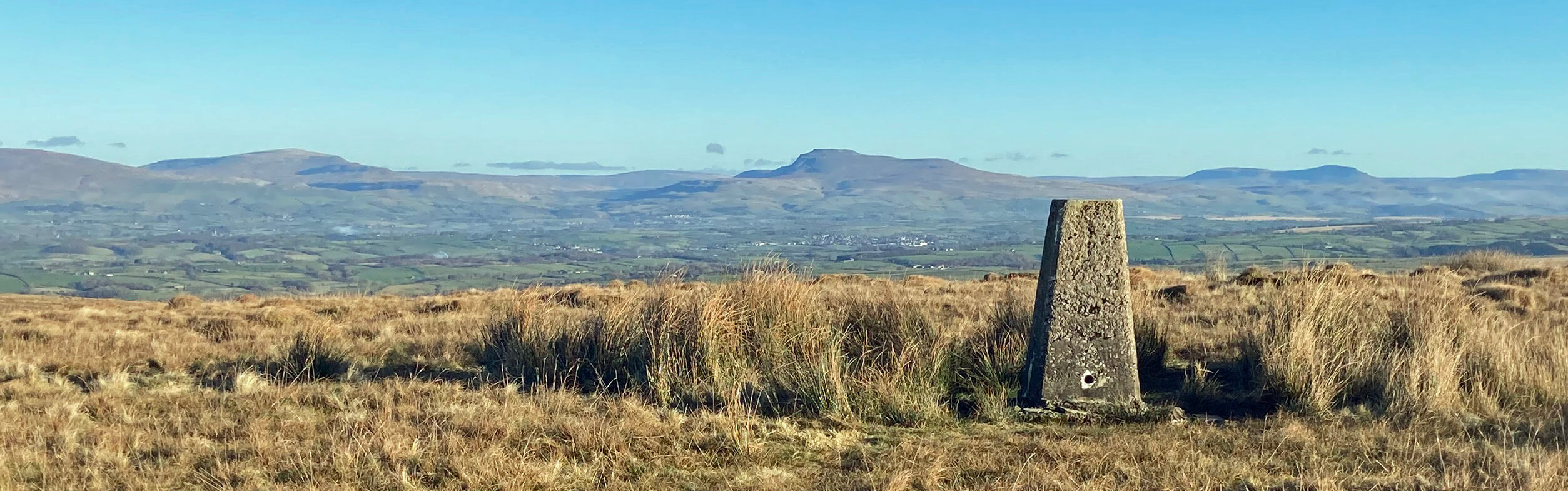
Approaching the Caton Moor trig point, Whernside, Ingleborough and
Pen-y-ghent beyond
For my first Sunday morning walk of 2026 I aimed for the top of Caton Moor, an almost
traditional first walk of the year, before venturing further afield. The sky was
blue, the air was still and the temperature was -3. However, there had been so
little rain in recent days that I didn’t anticipate much ice.
 First, though, I had a philosophical conundrum to resolve. I was recently asked, when
chatting about Saunterings, whether I preferred the walking or the writing. It seemed
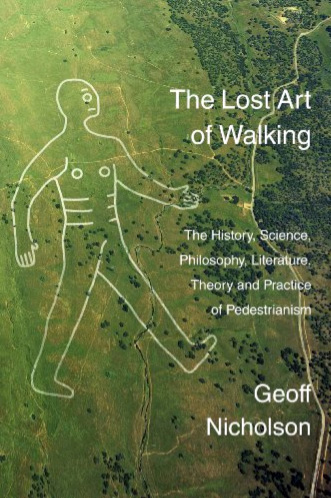
a strange question at the time. I had been reading a book by Geoff Nicholson entitled
The Lost Art of Walking: The History, Science, Philosophy, Literature, Theory and
Practice of Pedestrianism wow (– that’s my wow, not part of the title) (Nicholson, 2010),
in which he wrote that:
First, though, I had a philosophical conundrum to resolve. I was recently asked, when
chatting about Saunterings, whether I preferred the walking or the writing. It seemed
a strange question at the time. I had been reading a book by Geoff Nicholson entitled
The Lost Art of Walking: The History, Science, Philosophy, Literature, Theory and
Practice of Pedestrianism wow (– that’s my wow, not part of the title) (Nicholson, 2010),
in which he wrote that:
“We know that for William Wordsworth walking and writing were pretty
much synonymous. And I do believe that there’s some fundamental connection between the
two … The pace of words is the pace of walking, and the pace of walking is also
the pace of thinking. Both walking and writing are simple, common activities. You put one foot in
front of the other; you put one word in front of another.”
This may be where I have been going wrong. I’ve been putting one word
after another. Take the sentence “Russia invaded Ukraine”. Which word comes
after ‘invaded’ and which word comes before or in front of ‘invaded’? ‘Ukraine’
and ‘Russia’, surely. So, according to Nicholson, to write that sentence I should
first write the word ‘Ukraine’ and then write ‘invaded’ in front of it and then ‘Russia’ in
front of that. Otherwise I will cause presidential confusion. Therefore, when it comes
to writing a Sauntering I must first write what will become the very last word and then
write the penultimate word in front of it, and so on, back to the very first word.
After a sleepless night worrying that I will now have to write these reports
backwards (or, worse, that I will have to walk backwards so that the backwards words
appear in the required order), I realised that I had the wrong conception of a sentence.
I shouldn’t think of a sentence as a finished construct, with words before and after
one another. I should think of the sentence during the process of construction.
An unfinished sentence, say “To be or not …”, has a ‘front’ (the word ‘not’ in this case)
that is forging its way across the page. The sentence proceeds by creating a new
front by having a word (‘to’) written in front of the old front. That’s a relief! Now
I could set off forwards and write as I normally do. So, unlike the Goons, who
walked backwards for Christmas
(No. 4 in the charts in 1955), I am walking
forwards for the New Year.
I was well wrapped up for an invigorating walk and I was soon warm enough.
I passed Moorside Farm, the first of five farms along the lane up. Three of
the farms have been here for centuries, the other two are more recent additions. I don’t
know to what extent the farms are 100% farms – I suspect that some diversification is
necessary nowadays. Moorside Farm is probably the oldest of the set and has given its name
to the region. Anas Ghyll, off to the left, is old too. It has sensitive dogs that
detect walkers far away – but they are tethered and no problem for walkers, despite the
racket. The activities at No-Fret Farm seem to consist mainly of training sheepdogs.
Further on, Lots House Farm is, as it looks, a newish addition. And then, towards the
top of the lane, there’s Quarry House Farm, with an enviable view over the valley.
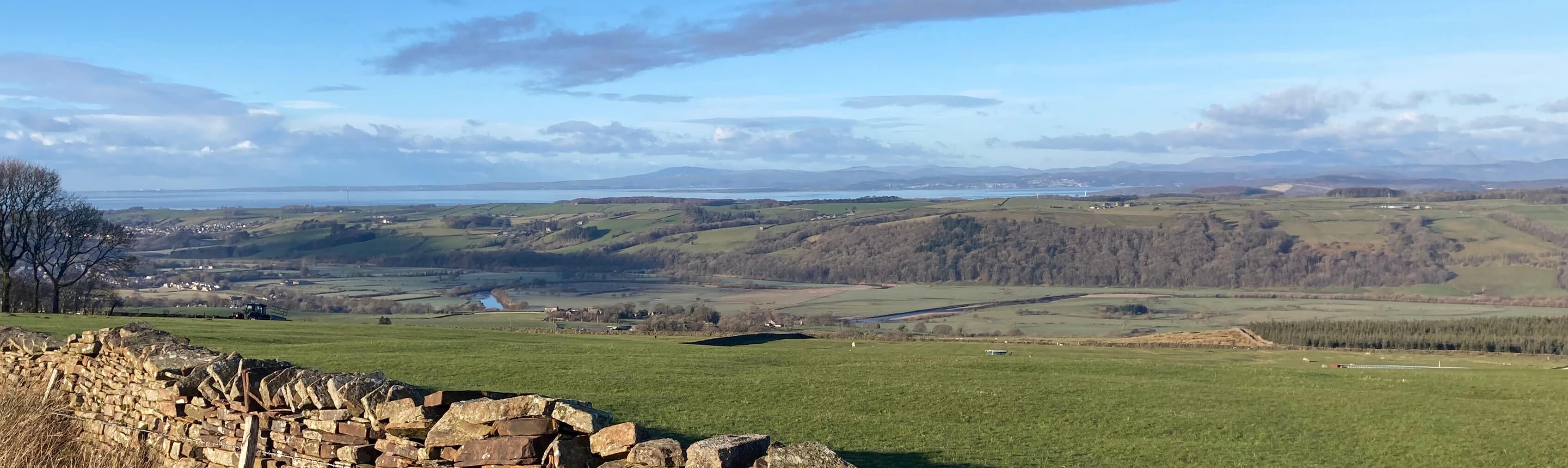
Looking back from the lane up, home village to the
left, Morecambe Bay and Black Combe beyond
It was silent, as usual, apart from the birds, although it was too cold and too
early in the year for them to be in full voice. The rooks, crows and jackdaws made
their usual clamour. Wrens and robins twittered about. A flock of starlings flew
past but not enough of them to really constitute a murmuration. On the moor a snipe
skittered away. I didn’t see or hear any curlew, lapwing or skylark: they are still
hunkering down at lower levels. I also passed several fields of silent sheep. Do ewes
only baa for their lambs? They have
two more months to wonder why they are getting fatter.
Beyond the picnic site, where, unusually, there was a car parked, I headed on up
the bridleway, for the first time for months. I then cut across – with the mud frozen
solid – to the trig point. I could see no sign of the forecast snow on any of the distant
hills. I feel fortunate that my local hill, of modest height (361 metres), provides
such a wide-ranging view of much of north-western England. North of Morecambe Bay is the
Lakeland panorama, merging into the Dales hills from the Howgills round to Pen-y-ghent.
To the south are Bowland hills, continuing to the Fylde region south of the bay. It’s all a
timely incentive to get out and about again. The hills don’t change much over the centuries,
which is reassuring. Neither do people, which is less so. (But I mustn’t
go there here – I must try to enjoy the moment on such a beautiful, if cold, day,
and hope for the best in 2026.)
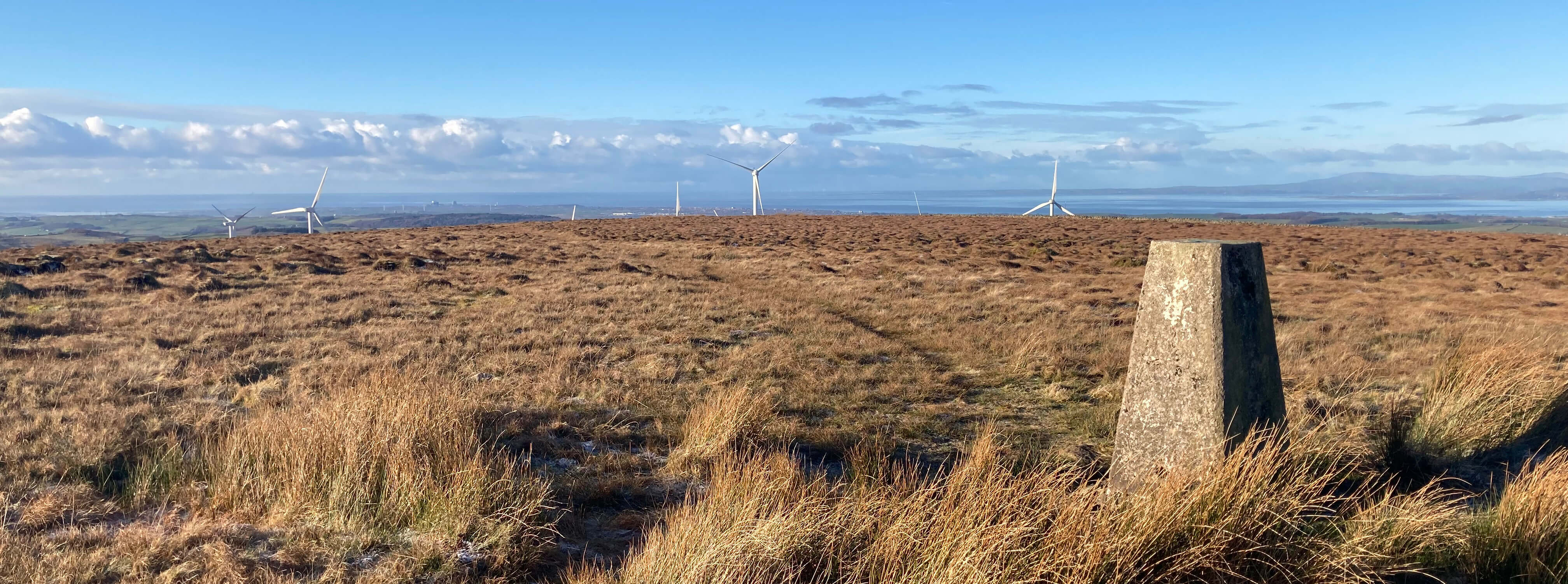
Looking back from Caton Moor trig point, to the
windmills and Morecambe Bay
I was right about the ice. Despite the freezing temperatures, there was no
ice on the lane, track or path. So my title’s ‘ice’ is metaphorical.
**********************************
A few hours later the snow arrived, as could be seen from our window:
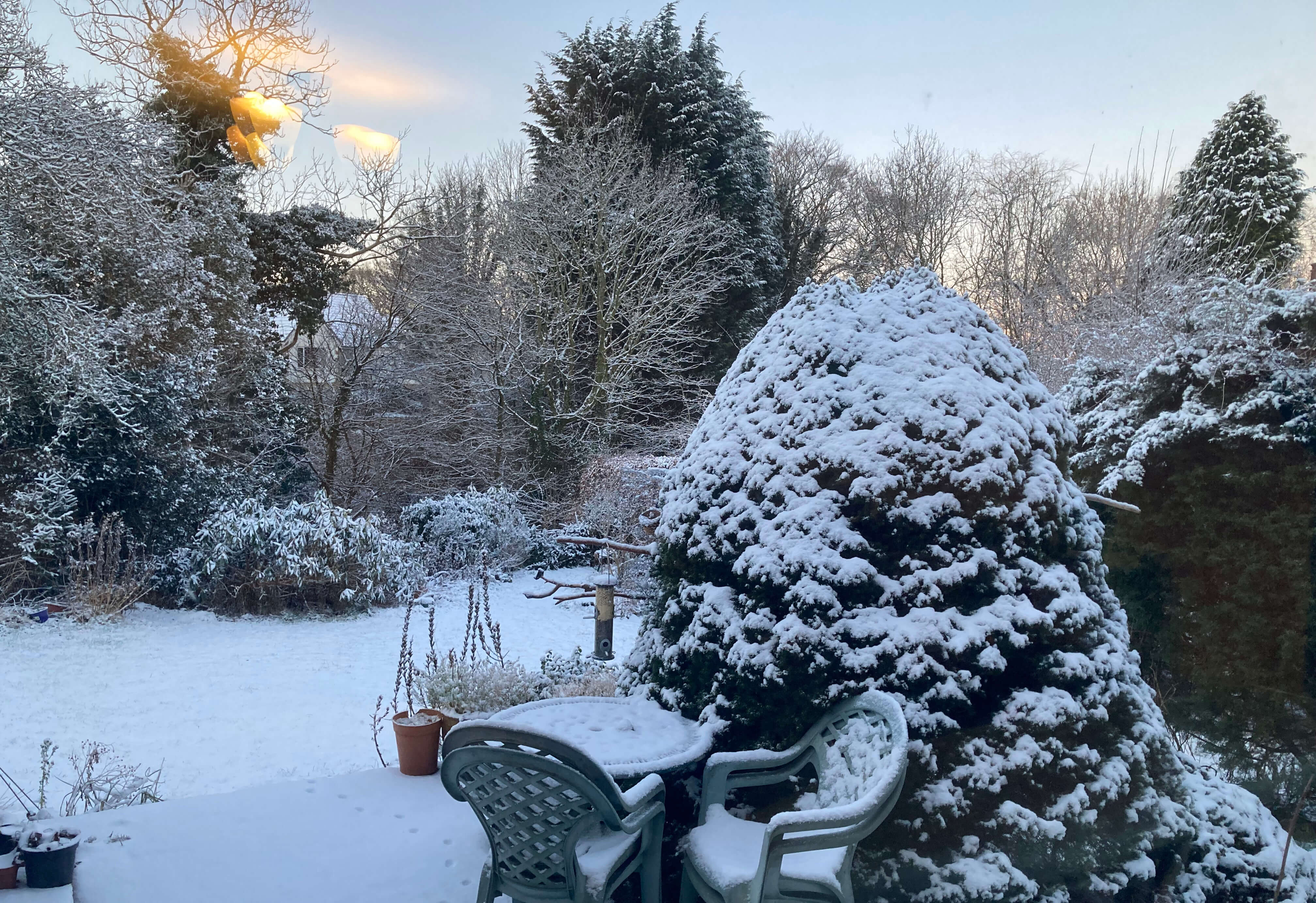
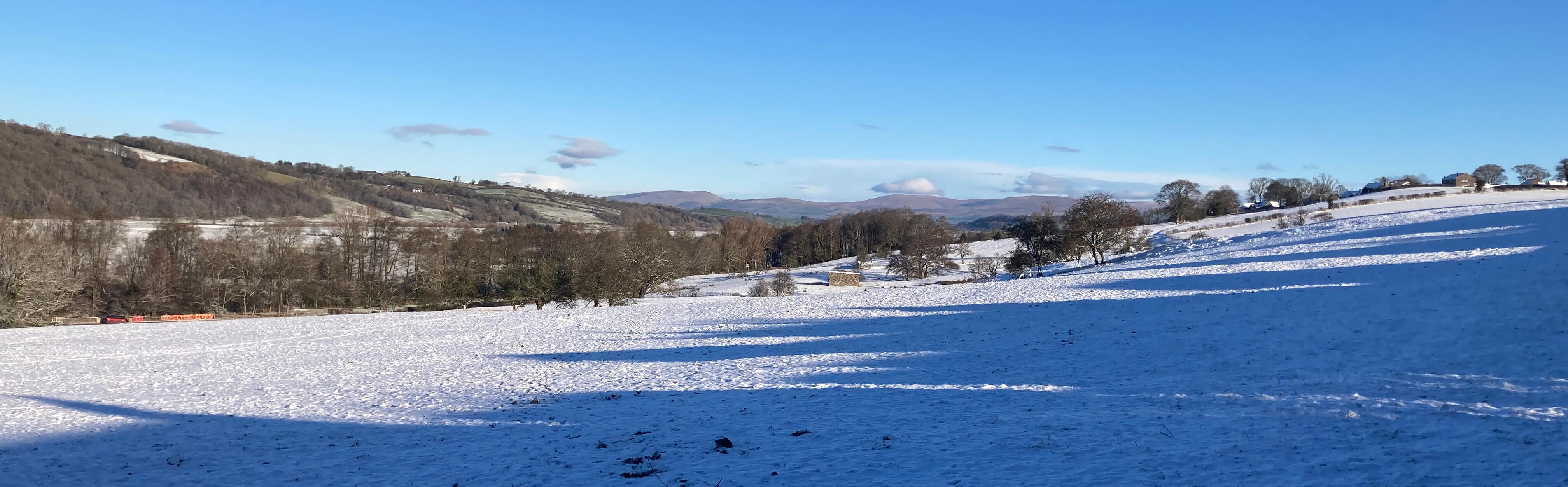
When we walked down to the river we were surprised to
find that although the valley had snow the distant hill tops still appeared to be
snowless:
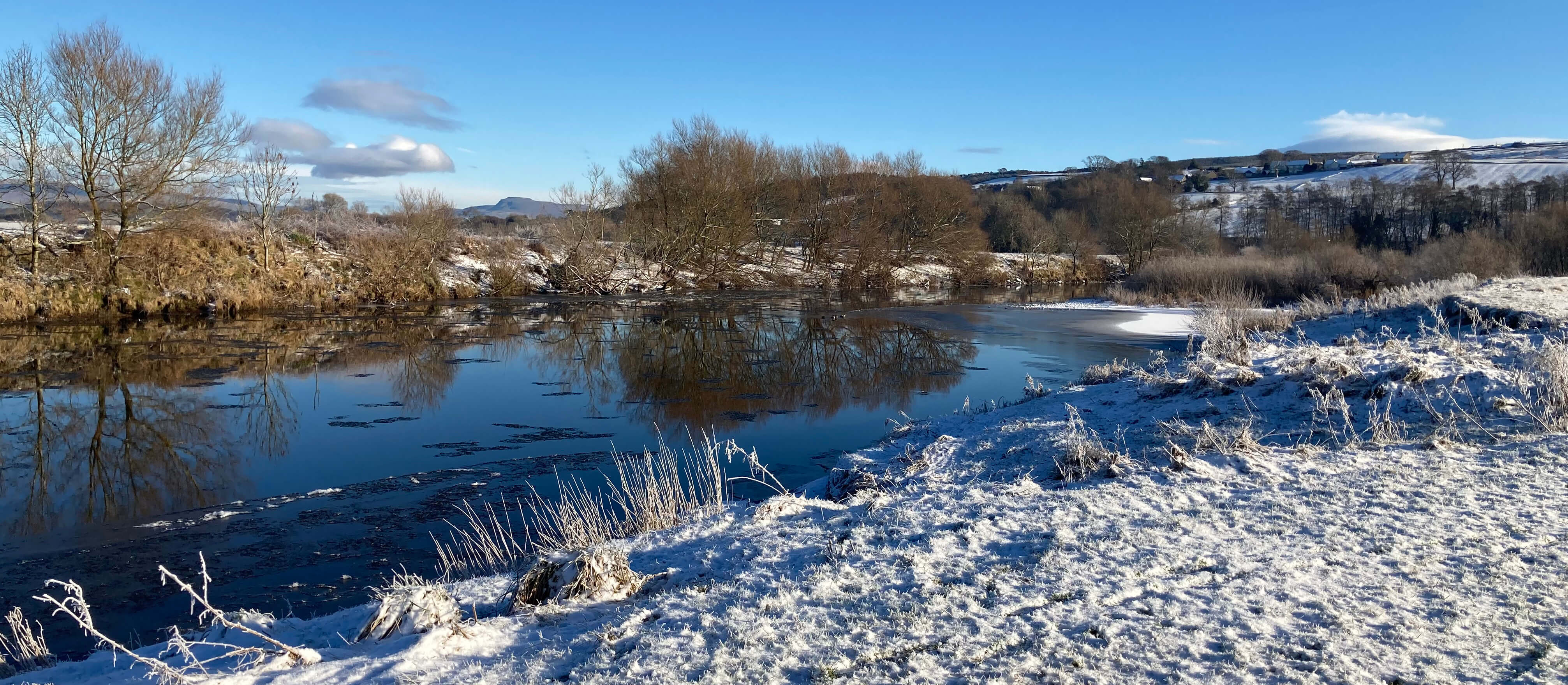
And down by the river, which had blocks of ice flowing in it, we could
see that even Ingleborough (one third in from the left) had little, if any, snow:
Date: January 4th 2026
Start: SD543644, Brookhouse (Map: OL41)
Route: E on Quarry Road – picnic spot – SE, S on track, N across the moor –
trig point – and back
Distance: 6 miles; Ascent: 310 metres
911 +486 /2400
Home
Preamble
Index
Areas
Dales
Hills
Lakes
Places
Reserves
Rivers
Structures
Villages
References
Me
© John Self, 2018-
Contact: johnselfdrakkar@gmail.com

Top photo: Rainbow over Kisdon in Swaledale;
Bottom photo: Ullswater